Showing posts with label Black Panther. Show all posts

Tuesday, 20 February 2018

Black Panther: Marvel's most grand product or Marvel's First Sociological Thesis?

with 0 Comment
Related image

Anyone feeling a bit nostalgic for some Magneto-Xavier love? Don’t worry! Marvel comes to the rescue packaging the good old X-Men fight-between-ideals story in a more world-relevant issue and throwing in a bit of monarchy and a whole lot of Africa into the mix. And wait, there’s a bit of James Bond and the Phantom as well (those who know it will see the connection).


And really though, it’s not at all bad. It might just be better than expected.

Image result for wakanda
Wakanda as shown in the film.
So Marvel’s much awaited Black Panther came out this week, with a nearly all-black cast, with the exceedingly revolutionary concept of Afro-futurism, where we get to peek into life at Wakanda, a hypothetical and fictional African nation which is way more advanced than the rest of the world that shares a common Imperialist history, due to the availability of a resource (the metal Vibranium) that allowed them to leap - technologically and societally - ahead of other civilisations by several decades. To maintain their superior status without getting involved in the world’s chaos, this nation uses special technology to hide in plain sight and disguise itself as a third-world country, disconnected from world politics since the beginning of the Time of Man.

_________________________

             ...Black Panther is a principally commercial film from the Marvel banner with cliche’ film troupes sprinkled all over it – a monarchy in trouble, a fight for the throne between warring relatives, and the entire world somehow in danger; many might even find some fleeting similarities with The Lion King in terms of the general plot movement.

But that doesn’t mean that the film doesn’t have its merits...

_________________________


The film follows straight after the events of Captain America: Civil War, with Prince T’Challa (Chadwick Boseman) gearing up to take over the Wakandan throne as well as the mantle of the Black Panther, a superhuman Wakandan protector, after the death of his father King T’Chaka. In the process of apprehending an old enemy from Civil War - Ulysses Klaue (Andy Serkis) – he comes across Erik Killmonger (Michael B. Jordan) a claimant to the throne with a radically different idea on how Wakanda should exist and what it should strive toward.

Black Panther is a principally commercial film from the Marvel banner with cliche’ film troupes sprinkled all over it – a monarchy in trouble, a fight for the throne between warring relatives, and the entire world somehow in danger; many might even find some fleeting similarities with The Lion King in terms of the general plot movement.

But that doesn’t mean that the film doesn’t have its merits.
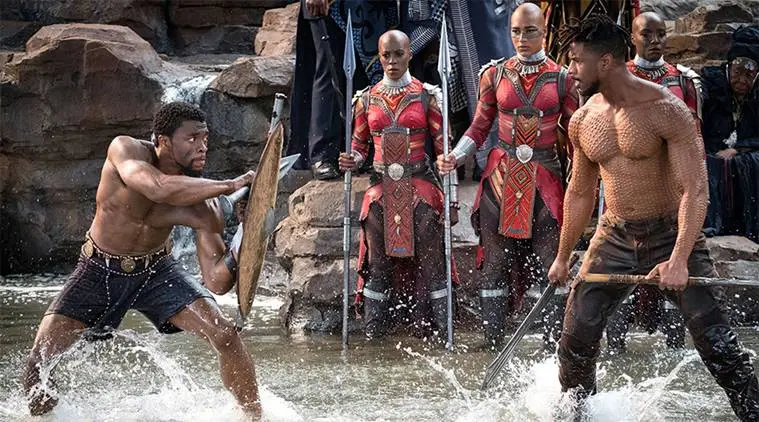
Image result for erik killmonger black panther
Erik Killmonger (Right) challenges T'Challa (Left) for
the Throne of Wakanda
Unlike the typical fight-for-the-crown stories, there is no unilateral device of good v. bad in the movie, like the X-Men films. Marvel does a repetitively good job with the character development of its villains (except for a couple of 2D villains in the past (Obadiah Stane in Iron Man, that elf guy from Thor 2, Blonsky and General Ross in The Incredible Hulk)) and it shows here again with Erik Killmonger. The audience gets to sympathize with both the antagonist and the protagonist based on their respective back-stories and no character is an absolute shade of black or white. Shades of Character! CHARACTER!!

The film is not flimsy, and has it’s layers. Other than a good villain, we see the development of a king and the soon-to-be newest addition to the Avengers in their fight against Thanos in the upcoming Infinity War. The film starts with exploration into T’Challa’s relationship with his late father, the seemingly all-good, benevolent Mufasa-like king who taught his son the ropes of being a king, seemingly so benign he could be called a god, but as the film advances we see a deeper spiritual connection between father and son, through which the new king gets to learn that his seemingly great father made mistakes too, mistakes that could seemingly shatter the pedestal on which he placed his father, and mistakes through which he learns that however big or great the position of a man may be, in the end he is still a man, who must stay as close to the ground as any other. We see a mirror image of the same in Erik Killmonger who, though fighting for an arguably noble cause and possessing the elements of a far-reaching king, might not eventually possess the elements befitting a good man. Also the film reasonably answers audience’s questions regarding the source and reach of the Black Panther’s superhuman powers, which had been left unanswered in Civil War.

__________________________________                ...Marvel does a repetitively good job with the character development of its villains  and it shows here again with Erik Killmonger (Michael B. Jordan)...

__________________________________

In Black Panther, we get to see an amazing conceptualisation of Afrofuturism and get to imagine how the African continent might have turned out as a society with a similar or greater kind of advantage over their Imperial oppressors, and we see this take effect in their clothes, architecture, symbolism and it’s anything but spectacular. We see a good connect between the design of these elements in the film and the contemporary comic book depictions, and hats off to the entirety of the film’s costume and VFX team for providing this visual feast.

Image result for black panther
Clockwise to Center - General Okoye (Danai Gurira),
M'Baku (Winston Duke), Ramonda (Angela Bassett),
Erik Killmonger (Michael B. Jordan), Shuri (Letitia Wright),
Zuri (Forest Whitaker), Nakia (Lupita Nyong'o),
W'Kabi (Daniel Kaluuya) and T'Challa (Chadwick Boseman)
Then we have the biggest thing to speak about – the all black cast! For probably the first time, we have a film that builds upon and moves forward from its roots in the ‘blaxploitation’ subgenre, showcasing a story with a total of two white characters, and an advanced, rich society where blacks are not a minority but the superior people; not the criminal on the run, but the police force chasing him, complete with their own MI5-ish intelligence organisation and cool gadgets and their own king for a James Bond; and yet succeeding as both a mainstream universally awaited comic book film - catering to the millions of Marvel fans the world over by providing a neat standalone entry into the MCU’s continuity with an extremely likeable and kickass superhero – as well as a sociological concept that sets out to tap into a completely new audience who get a major superhero/action hero that they can actually relate with, after nearly a century of filmmaking history.
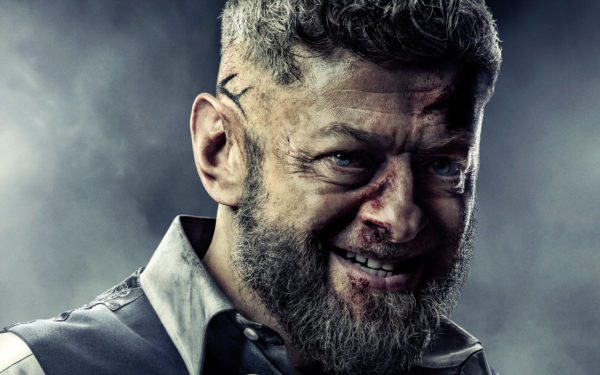
Image result for andy serkis klaue
Andy Serkis as Ulysses Klaue
Coming to the performances, before we move on to the principal cast, we must concede to the energy-ball that is Andy Serkis. Serkis in playing Ulysses Klaue provides a haunting yet comically entertaining rendition of a South African black-market arms dealer, and easily one of the most welcome performances in the film, with a neat South African accent and a dangerously eccentric personality. As for the remainder of the cast, it was a commendable performance from the entirety, especially from the principal leads i.e. Boseman, Jordan, Wright, Lupita Nyong’o as Nakia (T’challa’s ex-lover and a Wakandan warrior) and Danai Gurira as Okoye (the leader of the Dora Milaje). We could have expected better from Angela Bassett who plays Ramonda, the queen-mother of Wakanda, and somehow fails to shed her American persona completely and sound more locally African like her co-stars.

VERDICT: 4 () out of 5 toots of The Bugle


Black Panther seeks to be much more than a simple cliche’d popcorn flick with an all black-cast. And despite all the familiar elements, there is eventually something new and absolutely lovely. 

P.S. - Throwback to the time we saw Black Panther first in
Civil War

Monday, 9 May 2016

How Civil War is the Quintessential MCU film and not : Op-Ed Article

with 0 Comment

<WARNING : SPOILERS AHEAD>


Oh Captain! My Captain!! I’m on #TeamIronMan. Yeah, since the latter half of the past year, this and the #teamCap hashtag has been trending on the entire bloody internet. Way to build up steam for the grand opening. With memes, jokes, tweets and the hotlot making the rounds, Captain America: Civil War opened to some roaring fanfare, albeit late, in the Indian market.

Through this piece, I am not trying to appraise the Russo brothers in any out-of-the-way manner. I believe the tweets and facebook posts have done enough of that. Whatever I wish to state, and any opinions regarding the Russos, shall be substantiated through the elucidations of this post.  

Civil War is the most serious and matured entry of Marvel till date (after Jessica Jones and Daredevil), in all fronts possible. After the events of Avengers: Age of Ultron, and a mission against Crossbones that went sideways, the Avengers are obligated to sign the Sokovia accords, an agreement which would take away their autonomy, and screen the situations that require their presence. This divides the team into two factions, one pro-accords and the other against, led by Tony Stark and Steve Rogers respectively. Add to that, a conspiracy by a victim of the Avenger’s past exploits and the presence of Bucky Barnes a.k.a. the Winter Soldier, worsens the team fabric.

Civil War is the typical Marvel film, with more age and more wisdom added to the mix, despite defaulting in numerous instances in the rather comical slapstick-ish way typical of Marvel (Note: Usage of the word ‘typical’ twice should denote the weight of this statement). The film wins sweet points in performances, story (most of it at least), character development, and the political realism that it enters.

The film is basically centering around the polar change in the outlooks of Captain America and Iron Man. Cap’n is still the same old ‘Murican soldier, ‘who probably can’t live without a war’ as so aptly put by Ultron, but time and experience have brought out a new facet of his patriotism to the forefront: one by which he is ready to forsake any chains of order (which he used to be the embodiment of) to be able to protect the Earth as per his self-righteous terms, as well as his old friend who’s apparently innocent as his activities were being controlled by the rogue organisation HYDRA. We witness a metamorphosis in Rogers’ identity, from a soldier, to a symbol of structure and order, to an insurgent who believes that giving away the Avengers’ autonomy under Oversight would result in the failure of the very purpose of their existence.


On the other hand, Tony Stark faces a completely new angle in life. We see a bit of the old Tony return from the first Iron Man film, who after facing the ground reality of his weapons industry had shut it down in hopes of making the world a better place. After witnessing the aftermath of New York and Sokovia, Tony starts doubting the very autonomy that Rogers seems to uphold, and believes that the Avengers, like any other government entity require some sort of regulation, and this signs to the accords. Unlike the usual Tony Stark that the Marvel films have us used to, Civil War presents us with a much more calculative, much more pragmatic Tony, one who is ready to adapt to survive as well as develop, as an individual and a team.

The Stark-Rogers turmoil couldn’t be a more beautiful picture. Over their years together, the Cap’n and Iron Man have reached a spot, where their collective ideology has become similar, with a few still opposing facets. It’s like their 2 personalities trapped in 1 body, hashing it out to see whose definition of right and wrong is valid.


Point of interest: In terms of story structure, one can actually spot some striking similarities between Civil War and Batman v Superman: Dawn of Justice – 


    Both Tony Stark and Bruce Wayne have gained considerable experience over their years of practiced vigilantism (Tony lesser than Bruce though) (Both the experience and the v, that has led them to become rather precautious, especially with their superior counterparts i.e. Rogers and Clark Kent respectively.


    Both the films are building up to a master plan on a galactic level by an alien overlord, i.e. Thanos with his infinity stones, and Darkseid as was seen in Batman’s nightmare (for those who couldn’t catch up). 


    Both films’ villains are secretly sowing discord between the 2 lead superheroes who hash it out, and then reconcile later.


    Both Iron Man and Batman’s parents, specifically their mothers, are key parameters governing the turn of events in both the movies.


    And last but not the least, both films feature a deadly damsel having a mysterious past, bridging the two lead characters (Black Widow and Wonder Woman). 


    It’s as if this film was a reply to all those people making the Teletubbies Analysis between the MCU and the DCEU.


    I mean, seriously. It’s rather uncanny. And to think DoJ performed rather poorly in the market. Seems like some sort of classroom favouritism, this. No?

    Notwithstanding what’s about to follow, Civil War was a great entry by the Russo brothers, who already had the gem that was Captain America: The Winter Soldier in their kitty. Many raised the question that 'Why is this a Captain America film and not an Avengers film? What's the difference?' The difference lies in the principal point of view that the story piggybacks upon, one that is professed through the eyes of a man forged from raw patriotism, compassion, and self-righteousness in the face of harrowing odds 

    Some points in this movie though, could really get red spots in the otherwise cool film. Leading the array is the famous Airport fight sequence between #TeamCap and #TeamIronMan at Leipzig.

    Don’t get me wrong, it was a good fight. A damn good choreographed one, at that. But in the otherwise serious, mature presentation that Civil War was, and is expected to be considering it’s a ‘Captain America’ movie and not an Avengers movie, it was rather shoddy.

    Why in the world are Spiderman and Ant-Man being pulled into a fight that doesn’t even concern them remotely? Scott Lang is a father trying to wean off his criminal past and paying child support for his incredibly sweet little daughter, and somehow he found that being in a brawl at a German airport (which is completely uninhabited, God knows why) fighting alongside a 70 year old science experiment is the solution to all his problems. And he wasn’t even being paid!!!


    Same goes for Spiderman, but truly he wasn’t to blame. Really, Peter Parker’s a 19-year old kid. If I can shoot web out my hands and sorta kick ass, and Tony Stark offers me a nice suit, even I would accept the ticket to Germany, which begs the question: what the hell is wrong with Anthony Stark? You’re bringing a high school kid into your private skirmishes?? Just because he shoots white stuff that has high tensile strength??? Damn, and here I am writing paragraphs on how the guy’s matured and everything. WAY TO GO, TONY! <sic>


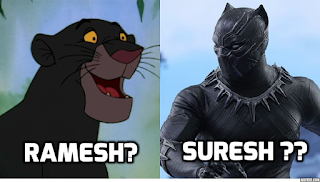
    Keeping the rest of the character lineup aside, I must point out the elephant in the room that is Civil War - Black Panther. Possessing the quintissential anti-hero persona, Black Panther scratches and claws his way into Cooldom. I suppose it’s become a norm of sorts: You have an antihero? You want him to be cool and kick-ass? Give him claws and kitten that bitch up! Possibly the next best antihero after Wolverine and Deadpool, and the next coolest cat after Wolverine and Bagheera, I really don’t see why anyone wouldn’t like him. If anyone doesn’t though, that’s their problem. And his. And his claws' <RED ALERT>.

    The typical Marvel film is guilty pleasure, the sort that even most critics aren’t able to run away from. Captain America: Civil War is that and more. Much more (This sounds bad, but is actually good). Through Civil War, Marvel proves its adaptability as well as its conviction, by creating a pragmatic, realistic story around the same goofball, never-seeming-that-serious superheroes, pitting them in a scenario involving real world problems like international law, sovereignty, treaties and agreements; problems that the earlier movies seemed to have a childish disregard for, without completely straying away from its comic spirit by providing a darker, more pessimistic portrayal. We saw how THAT worked out for DoJ (Not that I didn’t like it, but it sure is bad for business). 

    The studio has also tried to set the film as a launchpad for future members of the Avengers' which may include a certain adamantium feline (rumours) (Control your breath), and though the intros may be a little fumbled up, it's actually turned out pretty good. Future sees good for all things MARVEL 


    Followers

    Translate

    Powered by Blogger.