Showing posts with label film review. Show all posts

Tuesday, 27 March 2018

Hiccuping Through : Hichki | Review

with 0 Comment

Image result for hichki


You’ve seen this kind of movie before, in Hollywood as well as Bollywood. It’s the movie where someone enters the lives of a team of rebelliously careless underdogs to turn them around for the better - Coach Carter and Chak De! India to name a few. However where these movies dealt with a team overcoming their personal shackles particularly in a sport, Hichki gives a larger package which is both inspirational, and depictive of the realities in the Indian education system as well as the class differences that seemingly start to permeate into society from the inception point which is a school.


Naina Mathur (Rani Mukerji) is a young Mumbai woman who has Tourettes Syndrome (Go Google) and yearns to become a teacher more than anything in life, but is rejected nearly every opportunity to do so due to the speech impediment that is caused by her neurological problem. Eventually she lands a job at her alma mater where in exigent circumstances she becomes the in-charge of a class comprising a motley crew of slum kids who despite having gained admission into the school due to the Right to Education guaranteed by the Indian constitution, do not receive the same brand of attention or investment from the administration as their more socially privileged schoolmates, and are considered an extreme liability. The rest of the movie follows the journey of Naina and the kids towards achieving a semblance of success despite all obstacles and biases that come their way through social hurdles or personal misdirected energy.

Hichki is a top notch specimen of a commercial Bollywood film out to generate a social discussion while sensitising the audience with something new, which here is Naina’s Tourette’s Syndrome. It deals with class conflict that seemingly starts to establish itself from the nascent days of school; the concept of privilege and the resultant opportunities, both of which are probably not at par for 2 given people; the system of segregation of students into classrooms based on their academic performance – and packages all of them into a flowery Yash Raj product that despite a flurry of cheesy filmy instances, hits the sweet spot.

Neeraj Kabi and Shivkumar Subramaniam as Mr.Wadia and the school principal

The film does well by putting good actors in good roles too. Rani Mukerji gives an earnest performance as Naina Mathur, which might seem a bit too-sweet-to-be-true at times, but effective overall. Neeraj Kabi does a splendid job as Mr.Wadia, a polished co-teacher with Naina who is a stickler for orthodox methodologies of teaching and acts as the pseudo-antagonist of the film. Young talent that will blow you away are Harsh Mayar and Sparsh Khanchandani (Uttaran fame) as Aatish and Oru.

Verdict – 3  and a ½ out of 5 toots

Hichki isn’t absolutely hiccup-proof. It works on a familiar format, gives a familiar ending, but leaves a sensitive mark owing to a strong choice of subject and cast.   


Friday, 25 August 2017

Crush and Throw: Death Note | Review

with 0 Comment

Death Note had taken the anime world by storm when it released way back in 2003. Quickly gaining a cult following, and a massive approval rating of nearly 99% on nearly every review aggregator website, it was about time a film adaptation was made, and if its to gain international viewership, who better than America to produce it, and who better than Netflix to distribute it? And who better than a seasoned viewer to <YAWN> through the entire thing? Yeah, you get my drift.

Borrowing from the original story of the Manga/anime series, a genius high school student and recluse by the name of Light Turner finds a book titled ‘Death Note’ dropped by Ryuk, a Shinimagi (Japanese demon of death) with which one can kill anyone on the planet by just writing his name and mode of death on the book. Having misguided yet seemingly noble intentions, Light adopts the identity of Kira, and goes on a murderous spree, killing everyone and anyone he deems to be ill-fitted to exist in society, safely from the comfort of his desk. He enjoys his anonymity for some time, until an enigmatic detective ‘L’ takes up the challenge of revealing Kira’s true identity.

Image result for death note
The original Death Note manga 
A good, just thing to do when evaluating such a movie, is to see how well it connects with a viewer being introduced to the story for the first time, and hasn’t seen the original manga, because an adaptation is rarely successful in keeping up with the standards set by the original and accordingly expected by the fanboys.  Death Note falls flat on its face, either way. Too much story has been tried to be cramped in between 1 hour and 40 minutes of runtime, and the result is a speeding train missing nearly all points of coherence. I know I said we should do otherwise, but if we talk about the original series, there is enough creative content to stretch out to at least 2 well engineered movies. The way the original manga skirted along the thin line between good and evil, moderate and extreme, eventually making us side with the conflicted murderer, is completely absent from the movie.

Image result for death note netflix
Nat Wolff as Light Turner
Nat Wolff, known for his performances in Paper Towns and The Fault in Our Stars plays the angsty teen, Light Turner. Where playing a good-natured, normally behaving boy seemed right up his alley, playing a self-righteous murderer doesn’t. Most of his performance is plastic, and he seems like the stereotypical weak teenager who’s angry at his father, gets beat up by bullies, and speaks at a flat single scale unless acting out, and there’s a LOT of acting out. Weird, random acting out. Rather than the genius his character was supposed to look like, he comes off more as a meticulous, socially awkward boy trying to find kicks in murder.

Image result for death note netflix ryuk
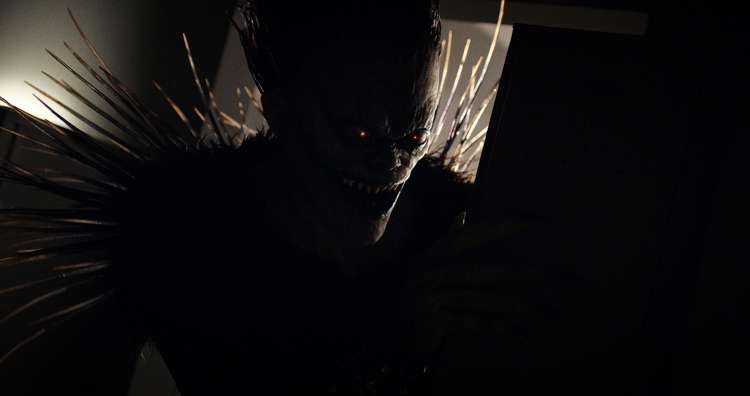
Ryuk, voiced by Willem Dafoe 
Willem Dafoe voices Ryuk, the Shinimagi who is the antagonist of the film and the series. A bored demon of death, he passes on his notebook to anyone and merely enjoys the show. Dafoe is probably my favourite choice for a negative character – the man’s voice has this natural creepy touch, it couldn’t work more perfectly. And he was the only redeeming factor in the character of Ryuk, a cheap CGI rendition of the original saga’s primary villain, who turns out to be more of a Sesame Street stock character, than the demon apathetic to any concerns of man and his world.

One aspect the film does fine is its cinematography and establishing the mystique around the detective ‘L’ played by Keith Stanfield, who appeared last in the Jordan Peele-directed film ‘Get Out’. He does fine. Just fine.

Verdict:and a ½ / 5 toots of the bugle


You don’t need a Death Note to be able to passively kill someone. Show them this movie, and boredom will do it.

Wakefield: Bryan Cranston, the powerhouse

with 0 Comment

Image result for bryan cranston wakefield


So this week I came across Wakefield, and naturally seeing the face of Bryan Cranston, this couldn't be put aside. Let's read on to know more.

Seriously though, Bryan Cranston. The best. Period.

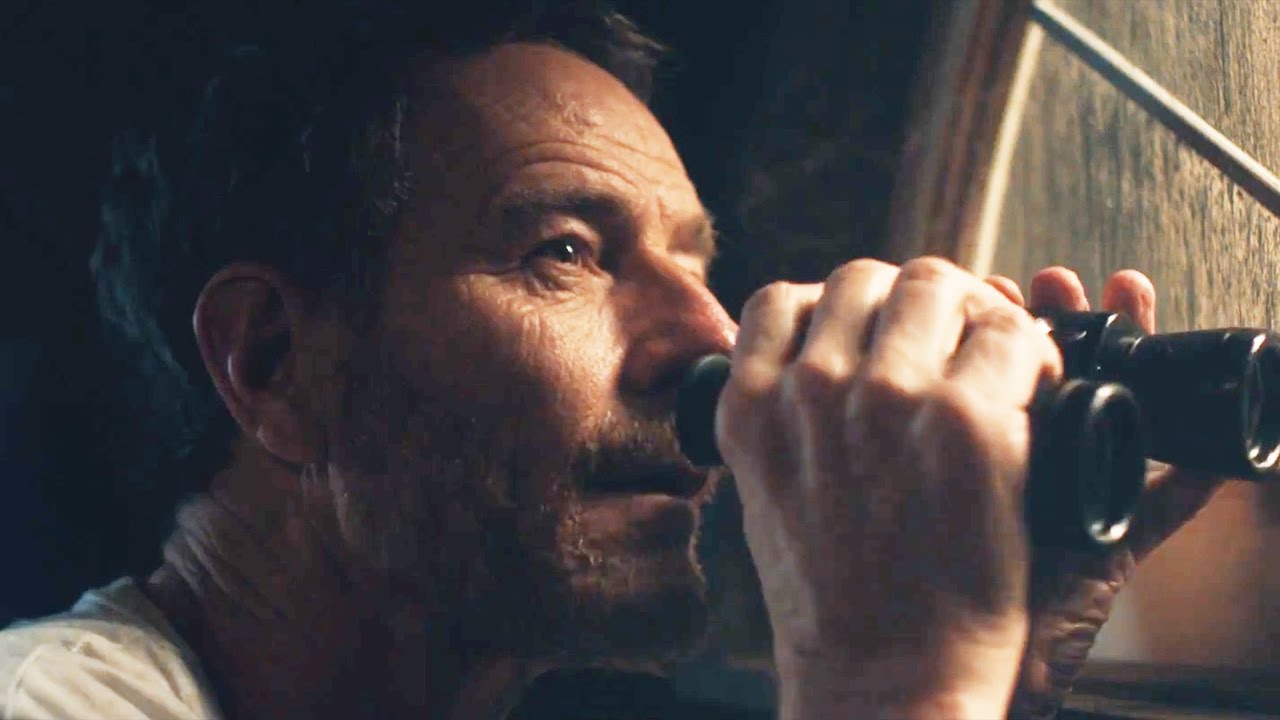
The Story - Directed by Robin Swicord, the screenwriter for The Curious Case of Benjamin Button, the movie revolves around Howard Wakefield, a successful lawyer in New York City living the standard family life with his wife Diana (Jennifer Garner) and two daughters, out in the suburbs. He is accustomed to his clockwork life of working, eating, sleeping and having a strained marital life, and is visibly frustrated. One day, while returning home, Howard trying to chase a raccoon away, follows it into his garage’s attic in the backyard. He discovers that he has a nearly perfect view into the affairs of his house from the attic window, and stays to see how his wife behaves in retaliation to his absence from dinner. One thing leads to the other, and Howard stays in the same attic for several months, leading his family to believe he has left them, and observes from the window how they go about their life and how much they’re affected by his absence.

The entire film, and every character portrait we come across, is from the view of the protagonist Howard Wakefield. He gives an account of the circumstances in which he met and married his wife, makes shoddy profiles of every person coming to his house post his disappearance.

The interesting thing is, despite his being the protagonist and the pivot of the story, for nearly half the movie, Wakefield comes off as a selfish, shallow, manipulative man who despite his own share of bad deeds, believes himself to be the victim of the relationships he’s bound himself in. For a movie balancing itself on the narration and point-of-view of one single character, it is remarkable how they achieve the feat.

Related imageAs a viewer, we are installed next to Howard in his attic, and in a conventional cinematic setup, a viewer always empathises with the protagonist, especially in a situation like this, but this film takes a different trajectory: In the initial sequence, we see his family, seemingly curious about his absence, but equally undisturbed. In this time, we feel for Howard the breadwinner, whose life is spent providing for the very people whose lives are going on uninterrupted and uninfluenced by his absence. In the following sequence, Cranston shows us the more diverse hues of Howard’s personality, where he is deeply contemptuous towards family and peers, and has arrived to a point where he expects some sort of returns for all the things he does for them. He objectifies and trivialises his wife, accusing her of being flirtatious with other men.  Moving further, he recounts how he played his colleague to win over Diana’s hand in marriage, and it is here that Cranston inadvertently enters the final sequence of the film, where he starts realising all the faults within himself, how dependent he had been on the various luxuries in his life prior to his living like a homeless man in his own attic, and how they have affected his life and relationships with people, and prevented him from realising their true worth.

I loved this movie because of the unique way its narrative is handled, with every scene of the movie being a flashback into a memory of Howard, handpicked to suit his side of the story yet subconsciously painting a detailed picture of Howard’s personality in the process. There is a steady revelation of his person - bad, terrible, even downright despicable, but sometimes surprisingly enlightened and compassionate - with every step of his story, one that he himself isn’t aware to be affecting. None of the story as narrated by him has a particularly linear structure, and he tells it as it comes to him, ranting away as if he’s complaining directly to the viewer without even peeking into the fourth wall.

Image result for wakefield jennifer garner

The only other significant known actor in the movie is Jennifer Garner, playing Howard's wife Diana. No specific judgment upon her, and nothing out of the usual good performance, but the character should have gone to an older actress, or at least one who'd look the same age as Cranston.

Wakefield, all in all, is a bitter-sweet (bitter mostly) drama about the mid-life crisis and the identity crisis that any family man could and must face in today’s frantic and seemingly uncaring world, and despite the dryness of its concept, brimming with significant, curious emotion, accommodated delicately with the complexities of its protagonist.


Related image

They could have done better with the epilogue, where they chose to end on an ambiguous note, but hey, is anybody perfect?

Followers

Translate

Powered by Blogger.