Showing posts with label the friday bugle. Show all posts

Tuesday, 27 March 2018

Hiccuping Through : Hichki | Review

with 0 Comment

Image result for hichki


You’ve seen this kind of movie before, in Hollywood as well as Bollywood. It’s the movie where someone enters the lives of a team of rebelliously careless underdogs to turn them around for the better - Coach Carter and Chak De! India to name a few. However where these movies dealt with a team overcoming their personal shackles particularly in a sport, Hichki gives a larger package which is both inspirational, and depictive of the realities in the Indian education system as well as the class differences that seemingly start to permeate into society from the inception point which is a school.


Naina Mathur (Rani Mukerji) is a young Mumbai woman who has Tourettes Syndrome (Go Google) and yearns to become a teacher more than anything in life, but is rejected nearly every opportunity to do so due to the speech impediment that is caused by her neurological problem. Eventually she lands a job at her alma mater where in exigent circumstances she becomes the in-charge of a class comprising a motley crew of slum kids who despite having gained admission into the school due to the Right to Education guaranteed by the Indian constitution, do not receive the same brand of attention or investment from the administration as their more socially privileged schoolmates, and are considered an extreme liability. The rest of the movie follows the journey of Naina and the kids towards achieving a semblance of success despite all obstacles and biases that come their way through social hurdles or personal misdirected energy.

Hichki is a top notch specimen of a commercial Bollywood film out to generate a social discussion while sensitising the audience with something new, which here is Naina’s Tourette’s Syndrome. It deals with class conflict that seemingly starts to establish itself from the nascent days of school; the concept of privilege and the resultant opportunities, both of which are probably not at par for 2 given people; the system of segregation of students into classrooms based on their academic performance – and packages all of them into a flowery Yash Raj product that despite a flurry of cheesy filmy instances, hits the sweet spot.

Neeraj Kabi and Shivkumar Subramaniam as Mr.Wadia and the school principal

The film does well by putting good actors in good roles too. Rani Mukerji gives an earnest performance as Naina Mathur, which might seem a bit too-sweet-to-be-true at times, but effective overall. Neeraj Kabi does a splendid job as Mr.Wadia, a polished co-teacher with Naina who is a stickler for orthodox methodologies of teaching and acts as the pseudo-antagonist of the film. Young talent that will blow you away are Harsh Mayar and Sparsh Khanchandani (Uttaran fame) as Aatish and Oru.

Verdict – 3  and a ½ out of 5 toots

Hichki isn’t absolutely hiccup-proof. It works on a familiar format, gives a familiar ending, but leaves a sensitive mark owing to a strong choice of subject and cast.   


Friday, 25 August 2017

Crush and Throw: Death Note | Review

with 0 Comment

Death Note had taken the anime world by storm when it released way back in 2003. Quickly gaining a cult following, and a massive approval rating of nearly 99% on nearly every review aggregator website, it was about time a film adaptation was made, and if its to gain international viewership, who better than America to produce it, and who better than Netflix to distribute it? And who better than a seasoned viewer to <YAWN> through the entire thing? Yeah, you get my drift.

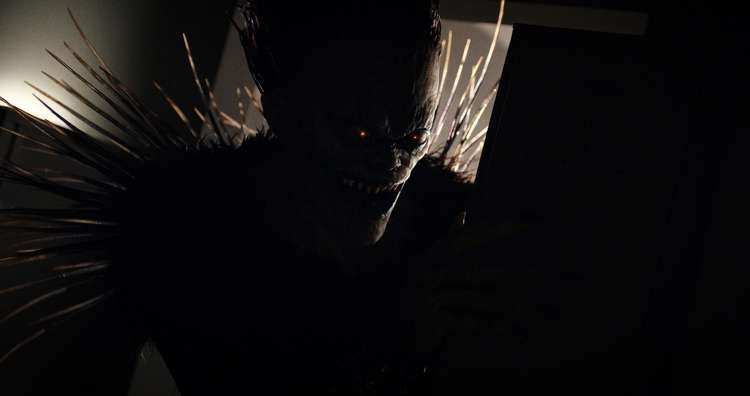
Borrowing from the original story of the Manga/anime series, a genius high school student and recluse by the name of Light Turner finds a book titled ‘Death Note’ dropped by Ryuk, a Shinimagi (Japanese demon of death) with which one can kill anyone on the planet by just writing his name and mode of death on the book. Having misguided yet seemingly noble intentions, Light adopts the identity of Kira, and goes on a murderous spree, killing everyone and anyone he deems to be ill-fitted to exist in society, safely from the comfort of his desk. He enjoys his anonymity for some time, until an enigmatic detective ‘L’ takes up the challenge of revealing Kira’s true identity.

Image result for death note
The original Death Note manga 
A good, just thing to do when evaluating such a movie, is to see how well it connects with a viewer being introduced to the story for the first time, and hasn’t seen the original manga, because an adaptation is rarely successful in keeping up with the standards set by the original and accordingly expected by the fanboys.  Death Note falls flat on its face, either way. Too much story has been tried to be cramped in between 1 hour and 40 minutes of runtime, and the result is a speeding train missing nearly all points of coherence. I know I said we should do otherwise, but if we talk about the original series, there is enough creative content to stretch out to at least 2 well engineered movies. The way the original manga skirted along the thin line between good and evil, moderate and extreme, eventually making us side with the conflicted murderer, is completely absent from the movie.

Image result for death note netflix
Nat Wolff as Light Turner
Nat Wolff, known for his performances in Paper Towns and The Fault in Our Stars plays the angsty teen, Light Turner. Where playing a good-natured, normally behaving boy seemed right up his alley, playing a self-righteous murderer doesn’t. Most of his performance is plastic, and he seems like the stereotypical weak teenager who’s angry at his father, gets beat up by bullies, and speaks at a flat single scale unless acting out, and there’s a LOT of acting out. Weird, random acting out. Rather than the genius his character was supposed to look like, he comes off more as a meticulous, socially awkward boy trying to find kicks in murder.

Image result for death note netflix ryuk
Ryuk, voiced by Willem Dafoe 
Willem Dafoe voices Ryuk, the Shinimagi who is the antagonist of the film and the series. A bored demon of death, he passes on his notebook to anyone and merely enjoys the show. Dafoe is probably my favourite choice for a negative character – the man’s voice has this natural creepy touch, it couldn’t work more perfectly. And he was the only redeeming factor in the character of Ryuk, a cheap CGI rendition of the original saga’s primary villain, who turns out to be more of a Sesame Street stock character, than the demon apathetic to any concerns of man and his world.

One aspect the film does fine is its cinematography and establishing the mystique around the detective ‘L’ played by Keith Stanfield, who appeared last in the Jordan Peele-directed film ‘Get Out’. He does fine. Just fine.

Verdict: 1 and a ½ / 5 toots of the bugle


You don’t need a Death Note to be able to passively kill someone. Show them this movie, and boredom will do it.

Wakefield: Bryan Cranston, the powerhouse

with 0 Comment

Image result for bryan cranston wakefield


So this week I came across Wakefield, and naturally seeing the face of Bryan Cranston, this couldn't be put aside. Let's read on to know more.

Seriously though, Bryan Cranston. The best. Period.

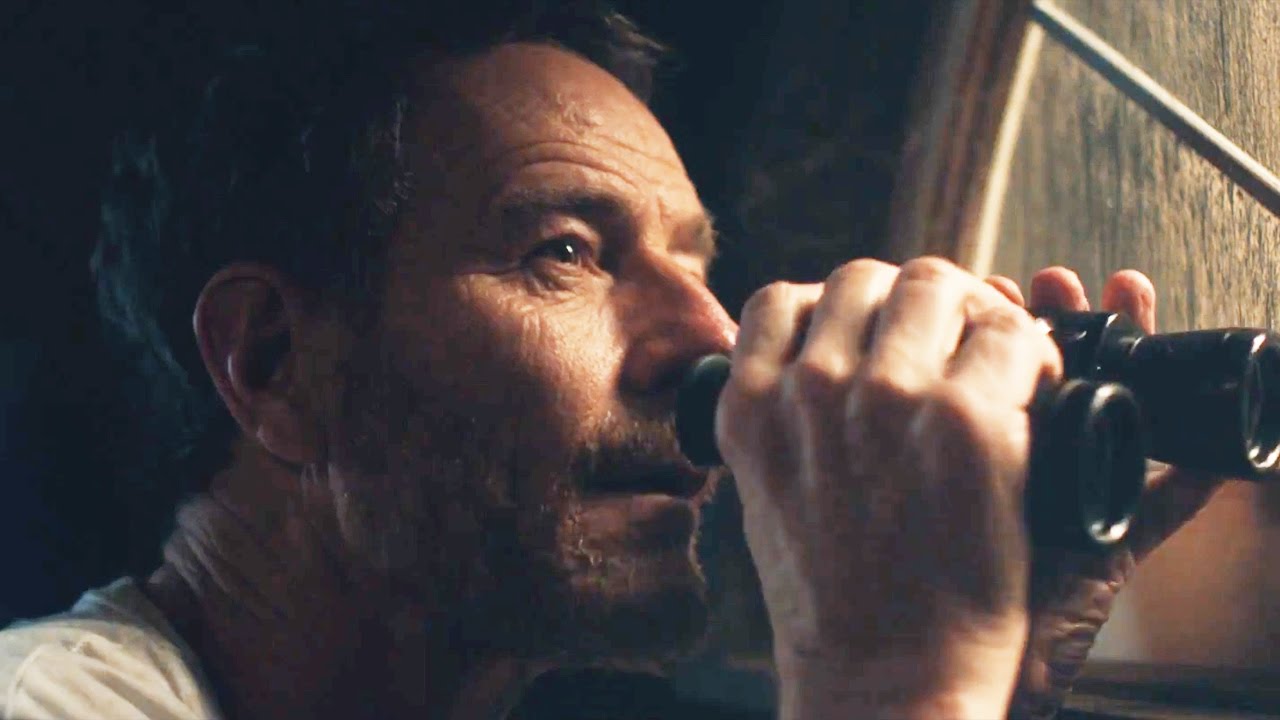
The Story - Directed by Robin Swicord, the screenwriter for The Curious Case of Benjamin Button, the movie revolves around Howard Wakefield, a successful lawyer in New York City living the standard family life with his wife Diana (Jennifer Garner) and two daughters, out in the suburbs. He is accustomed to his clockwork life of working, eating, sleeping and having a strained marital life, and is visibly frustrated. One day, while returning home, Howard trying to chase a raccoon away, follows it into his garage’s attic in the backyard. He discovers that he has a nearly perfect view into the affairs of his house from the attic window, and stays to see how his wife behaves in retaliation to his absence from dinner. One thing leads to the other, and Howard stays in the same attic for several months, leading his family to believe he has left them, and observes from the window how they go about their life and how much they’re affected by his absence.

The entire film, and every character portrait we come across, is from the view of the protagonist Howard Wakefield. He gives an account of the circumstances in which he met and married his wife, makes shoddy profiles of every person coming to his house post his disappearance.

The interesting thing is, despite his being the protagonist and the pivot of the story, for nearly half the movie, Wakefield comes off as a selfish, shallow, manipulative man who despite his own share of bad deeds, believes himself to be the victim of the relationships he’s bound himself in. For a movie balancing itself on the narration and point-of-view of one single character, it is remarkable how they achieve the feat.

Related imageAs a viewer, we are installed next to Howard in his attic, and in a conventional cinematic setup, a viewer always empathises with the protagonist, especially in a situation like this, but this film takes a different trajectory: In the initial sequence, we see his family, seemingly curious about his absence, but equally undisturbed. In this time, we feel for Howard the breadwinner, whose life is spent providing for the very people whose lives are going on uninterrupted and uninfluenced by his absence. In the following sequence, Cranston shows us the more diverse hues of Howard’s personality, where he is deeply contemptuous towards family and peers, and has arrived to a point where he expects some sort of returns for all the things he does for them. He objectifies and trivialises his wife, accusing her of being flirtatious with other men.  Moving further, he recounts how he played his colleague to win over Diana’s hand in marriage, and it is here that Cranston inadvertently enters the final sequence of the film, where he starts realising all the faults within himself, how dependent he had been on the various luxuries in his life prior to his living like a homeless man in his own attic, and how they have affected his life and relationships with people, and prevented him from realising their true worth.

I loved this movie because of the unique way its narrative is handled, with every scene of the movie being a flashback into a memory of Howard, handpicked to suit his side of the story yet subconsciously painting a detailed picture of Howard’s personality in the process. There is a steady revelation of his person - bad, terrible, even downright despicable, but sometimes surprisingly enlightened and compassionate - with every step of his story, one that he himself isn’t aware to be affecting. None of the story as narrated by him has a particularly linear structure, and he tells it as it comes to him, ranting away as if he’s complaining directly to the viewer without even peeking into the fourth wall.

Image result for wakefield jennifer garner

The only other significant known actor in the movie is Jennifer Garner, playing Howard's wife Diana. No specific judgment upon her, and nothing out of the usual good performance, but the character should have gone to an older actress, or at least one who'd look the same age as Cranston.

Wakefield, all in all, is a bitter-sweet (bitter mostly) drama about the mid-life crisis and the identity crisis that any family man could and must face in today’s frantic and seemingly uncaring world, and despite the dryness of its concept, brimming with significant, curious emotion, accommodated delicately with the complexities of its protagonist.


Related image

They could have done better with the epilogue, where they chose to end on an ambiguous note, but hey, is anybody perfect?

Tuesday, 8 August 2017

The Lost City of Z: An Ode To The Spirit Of Discovery

with 0 Comment
The subject of historical geographical exploration is one that has been depicted in cinema usually as a taste of exaggerated fanciful adventure (cue: Indiana Jones), animation (cue: Tarzan), or comedy cue:  the upcoming Jumanji 2). As a medium of information apart from plain entertainment, there was a dearth of cinema that could showcase a detailed picture of the physical and emotional journey of an explorer, wandering in uncharted, potentially dangerous regions, invested into the fact that this journey could well cost them their lives. 


Then you come across this absolutely beautiful piece of cinema – a beautiful account of a British explorer and soldier, Major Percy Fawcett, a name forgotten over time, and one of the most influential figures linked to the mythical land of El Dorado believed to be harbouring a secret civilisation much ancient and more advanced than any other known the world over. The film covers Fawcett’s journey, from his admittance into the Royal Geographical Society of England, upto his eventual disappearance in the dense jungles of the Amazon. Major Percival ‘Percy’ Fawcett is assigned to an expedition near the Brazil-Bolivian territory for mapping uncharted territory along with Corporals Henry Costin and Arthur Manley. On his first trip down, he faces threats such as extreme climatic conditions, rampant disease, invisible bloodthirsty tribesmen, and in the least, a piranha-laden Amazon River, surrounded by an unfriendly forest that cannot be relied upon for subsistence.

An unblemished vision and its raw portrayal, and an extremely well-picked ensemble come together to make this film a lush, intricate account into the darkness faced by explorers working to discover new lands to the point of obsession, and continuing on despite continuous challenges to their reputation, health, lives and sanity.

Image result for the lost city of z
Robert Pattinson as Corporal Henry Costin,
Fawcett's aide-de-camp
Fawcett is played by Charlie Hunnam, most well known as Jax Teller in the long running Sons of Anarchy, Raleigh Becket in Guillermo del Toro’s Pacific Rim, and the title lead in Guy Ritchie’s crime-comedy-fantasy film King Arthur: Legend of The Sword. One could say Charlie Hunnam’s naturally brooding look and demeanour helps him fill Fawcett’s shoes quite well, as he captures the turbulences faced by the explorer and his aide-de-camp Costin, played by Robert Pattinson, another gem of an actor (discount the Twilight saga, and you’ll know what I mean), and how the obsession over the possibility of finding a hidden civilisation came to become the defining account of his life as the world knows it. Sienna Miller delivers a splendid heartfelt performance as Nina Fawcett, the major’s devoted wife who is nearly equally dedicated to him accomplishing his objective.

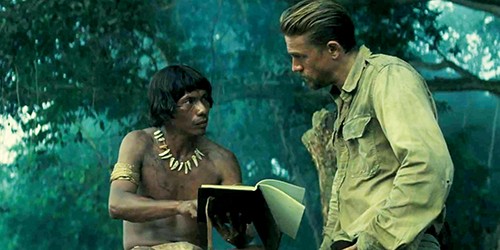
Image result for the lost city of zEnough said about the cast. Coming to why this film struck such a chord with me, I would point out a particular sequence in which we get to witness the near-summation of the dire straits Fawcett and his men find themselves in, halfway through the movie. On their second trip down the Amazon, they are intercepted by a familiarly aggressive group of tribesmen and forced to retreat to the opposite bank of the river. Trying to reason with the indigenous people, Fawcett bursts out into song and using a book as a shield for his face, moves forward towards them to attempt communication. Suddenly an arrow comes flying and pierces the book, missing Fawcett’s face by bare inches. The incredible build-up to the sequence pauses with a heart-stopping instant. But if I wasn’t invested enough in the story, Fawcett instead of being the stereotypical film explorer and brushing the arrow aside, momentarily phases out, and we see his life and everything he yearns to return to, literally flashing before his eyes and he tries to compose himself, all the while maintaining his stance and composure, and despite the same, proceeding to broker peace with the very same tribesmen.

Though for a short amount of time, Tom Holland appears as Jack Fawcett, Percy’s son who accompanies him on his final journey to the Amazon before their disappearance, and gives a more-than-decent performance, showcasing his serious chops, a grade above what we see in his latest Spiderman: Homecoming.

Image result for the lost city of z
Hunnam and Holland caught between two tribal groups
In the age of larger-than-life commercial cinema, which hinges on extreme camera work, high profile names and style above substance, I feel glad that sometimes filmmakers like James Grey move out of the track to make cinema such as this – cinema that manages to evoke a hundred emotions other than plain exhilaration from intermittent one-liners, something we’ve become way too used to owing to commercial cinema. Where most films manage to establish a scenario where we view events through a window and feel a fraction of the thrills, the few like The Lost City of Z gets you holistically and deeply invested into the journey of their characters, where after a point you build an almost personal emotional connection with them.

Friday, 7 July 2017

Revenge of Birdman! - Review of Spiderman Homecoming

with 0 Comment


“After the blazing success of Birdman, Michael Keaton returns to don the wings and become the
feathery super character once more, with this sequel...”

“Wait, what is this?”

“What? It’s the review for Birdman 2.”

“There’s... no such movie. What’re you smoking?”

“But Michael Keaton plays this winged bird-like character, in New York City? So I thought, naturally... Birdman, you know...”

“It’s Vulture, goddammit!! And it’s the villain in SPIDERMAN: HOMECOMING, a SUPERHERO film in the MARVEL CINEMATIC UNIVERSE!! Get your head out of your bugle! Sheesh!”  

“... My bad.”


So Kevin Feige presents us with the 16th installment under the MCU with a completely new film on a superhero we’ve... seen before. 2 of them, as a matter of fact.

So... what’s new and improved over the predecessors?

EVERYTHING! <almost>

Like we all know, Peter Parker is a high school student who was bitten by the radioactive spider and became extra sticky and whatnot, and eventually dons the red and blue to prevent crime in New York City. But being a high school student in the 2010s, especially in the super-advanced Marvel Cinematic Universe, the character and his world needed some upgrades. Technical, and cultural. Being a millennial high school student, Peter Parker has finally been tailormade as one.

Image result for spiderman homecoming tom hollandThe film starts with the video chronicle created by Peter Parker (Tom Holland) while fighting #TeamCap in Civil War, self-bragging about his adventures after being temporarily being recruited by Tony Stark, up until the point where Tony drops him home in Queens with a high-tech spidey suit with the veiled promise that he ‘might’ be called upon to be an Avenger. The rest of the story covers his journey as a high-school student who must try and fit his alter ego somewhere between his ordinarily complex life.

Being one of the most successful superhero names of all time, and the company mascot for Marvel, AND being a original member of the Avengers, it was about time that Marvel inducted the character into their current Avenger universe. Where Spiderman: Homecoming rises above its predecessors, is realising and poking fun at some of the most obvious questions that have been asked by the prudent fans since a long time, such as –

·         How effective a superhero would he be in the suburbs, where there is an obvious lack of tall buildings to swing from?

·         How effective a superhero would you be on a boat, WHERE there is an obvious lack of any structures whatsoever to swing from?

·         How the heck is he able to avoid all sorts of nosey questions about being missing without explanation from crucial social situations?     

The most commendable feature of this movie is that at no single point, does it dwell. Like I said, it starts off by the video chronicle by Peter, and the rest of it is told in the same way as a teenager verbally recounting his far-fetched experiences after an exciting day, and though the same tends to get boring, it works extremely well here because we’re able to grasp the visuals of that story, with no unnecessary extra detail, and moving on with rambunctious energy toward the next sequence. Sometimes this pace is too fast for comfort, but it works mostly.

The narrative and the characters are like a sitcom at so many places, they could actually rename this movie as “Spidey and Friends”. Marisa Tomei as May (no more ‘Aunt’, because younger and hotter), Zendaya as Michelle Jones and Tony Revolori as Flash Thompson provide quick, random and wacky comic relief reminiscent to the side characters in some television sitcom.

Fans get introduced to a new side of Tony, who seems to be nurturing a mentor-protege relationship with Peter, who he can’t simply drop back into his world upto his own devices, after using his help in Civil War, and knowing the possibilities and extent of Peter’s Powers, and the situations the latter could find himself stranded in without the proper training and guidance of a veteran (not that Tony himself is a golden example, but anyhow).
Image result for tom holland gif


Getting to the new Spiderman, Tom Holland, all praises fall short to express the good time that this guy provided as the titular character. The young English actor and dancer completely drowns himself into the character Spiderman, quite literally, performing nearly all the stunts and action sequences himself, and having fun at his job with boisterous, energetic and youthful appeal. To be able to steal the show surrounded by a cast of industry veterans is a feat that requires no validation.


Image result for michael keaton vultureSpeaking about the villain, Birdman... sorry, ‘Vulture’ who is quite aptly named, considering the fact that he literally lives off the alien and robotic scraps from the battles involving the Avengers in New York (Avengers, 2012) and Sokovia (Age of Ultron, 2015) that he salvages and sells as high-tech black-market weapons (to street thugs?), Michael Keaton looks good as the same. Though his performance more-than-often verges on textbook-comic-book-supervillain, he possesses a natural element of intimidation that works pretty well, particularly in the scenes involving him and Peter. His characterisation is quite spot-on as it combines the stereotypical comicbook sense of evil, but lacking the megalomaniacal attitude, and having the grounded reasonability of Willem Dafoe’s Norman Osborn (Spiderman, 2002).

Additional talent includes Jennifer Connolly who voices Karen, the Artifical Intelligence in Peter’s suit.

<FUN FACT: Jennifer Connolly is the wife of Paul Bettany, who voiced J.A.R.V.I.S. and played the Vision>

VERDICT: 3  and a half/5 toots of the bugle


Keep hangin' in there, Pedro!

Marvel Studios maintains its impeccably premium track record with Spiderman: Homecoming. With a wee bit room for growth.

P.S. As is usual with any Marvel movies, you don't want to miss the end-credit cookie by Captain America! At. Any. Cost. 

Friday, 16 December 2016

Have a taste of Tisca Chopra's 'Chutney'.

with 0 Comment
What is a short film, I ask you? 

If filmmaking is a drug, a short film's cocaine <Eric Clapton crooning in the background>. 

Today I seize this opportunity to analyse and applaud something I never ventured to consider for an opinion before, since it used to lie outside a comparatively more mainstream market of the conventional 'movies' which preemptively meant Hollywood or Bollywood. Short films fleet past us because they are small, both in length and project size, and are much less promoted than theatrical cinema. But this medium has grown to become a powerful storytelling medium, owing to strong, taut narratives, perfectly unsaturated in the stimuli to which they desire us to react.
Today I came across Chutney, a 16-minute long short film produced by Tisca Chopra who also co-wrote it with Jyoti Kapur Das, the director. A few lines ahead, is provided an analysis into some plot and character points that I believe make this project stand out unlike any recent cinematic indulgence.

Before you read any further, please first see 'Chutney' in the link below, if you haven't already, and then read on and express how much you're able to relate with the write-up: 


Done? Seen it? Okay.


Image result for tisca chopra chutneyMoving on then, to the first question that crossed me while seeing this: CAN YOU BELIEVE THAT IS TISCA CHOPRA IN THE LEAD? We have witnessed some amazing character development in some really amazing films, and one is just left awestruck to see Tisca portraying in such a raw, beautiful manner. But here, the reason that her entity here stands out, lies much in the physical persona of Tisca's character i.e. the Ghaziabadi Didi (we shall refer to her as 'Didi' henceforth' considering the character's name isn't revealed) serving the eponymous chutney. Due credit to Prem Singh and Mithu Santra, the makeup and hair guys behind this.

Didi oozes such innocent, earthy and dangerous elements which can be easily be understood as the very embodiment of the evils let loose upon the world from Pandora's box. The entire story develops to send a spine-chilling message to a woman, played by Rasika Dugal quite evidently hitting it off somewhat objectionably with Didi's husband Virji i.e. Adil Hussain. 

The narration of this tale can be called nothing short of a play straight out of Tarantino's style of filmmaking, though it is more elucidative, with backstory sequences leaving nothing to the viewer's imagination, and simply serving up a dish merely for the tasting (ergo: Chutney). With an extremely well matched group of actors, including the supporting female Rasika Dugal, this is one well made dish (I love how this film's title plays with my habit of comparing films with food). 

An element in the story I wish to comment upon exclusively, is one which would have gone largely unnoticed by the majority viewership - the servant. Not Bhola, the boy brought up by the lead couple and then buried unceremoniously by Didi. Not him.

I refer to Munna. Yes Munna, who hurls food into his masters' and guests' trays, who spits in their drinks, who smokes in their presence, and sings 'Lollipop lagelu' behind the backs of female guests. Superficially off-putting, and seemingly inconsequential, he is quite in contrast to Bhola, the shy boy who served dutifully and made delicacies for his masters.

But is the entity of Munna merely a servant, a simple manifestation of the negativity lingering around the household in the film? What if it is the continuance of the entity that was Bhola, which has found refuge in Munna's facade?

All the while, alongside Didi's tale of Bhola, Munna's antics are a running device, which are subtly drawing a comparison between his self and the picture of Bhola being painted by Didi. Bhola is shown as a hardworking boy, who provides a heartfelt service to his masters and acts humbly and always in a manner seemingly expected from a good servant. If one observes Munna's actions, they aren't merely of some character who is twisted just for the fun of it, but of someone who has been scorned at the hands of the people toward whom he behaves so i.e. Didi and Virji. 

The food of the house, and the chutney are made from items grown in the house itself, specifically on the Bhola's grave. Stands to reason, the food is soiled in the negativity with which Bhola died, and contains a part of him. Munna's character exists as a specimen, a victim even, of this food, who subconsciously houses the scornful side of Bhola, which reflects all too well in his callous attitude, specifically apparent at 8:15 in the video above, where though Munna abuses Bhola, at closer observation, it seems to be more of a self reprimand by his subconscious Bhola.

Sumit Gulati, who plays Munna must be careful though. After a portrayal or 2 more of such sleazy, disgusting servant type characters, I genuinely hope he doesn't get typecast as one. For those who couldn't guess, this is an absolute compliment toward his acting skill, which we have been subject to earlier in movies such as Talvar (2015). 

What are your opinions and observations about the plot, the characters, and other elements of this little film? Do you agree, disagree or are you just <meh>? Do share with me below.

Monday, 9 May 2016

How Civil War is the Quintessential MCU film and not : Op-Ed Article

with 0 Comment

<WARNING : SPOILERS AHEAD>


Oh Captain! My Captain!! I’m on #TeamIronMan. Yeah, since the latter half of the past year, this and the #teamCap hashtag has been trending on the entire bloody internet. Way to build up steam for the grand opening. With memes, jokes, tweets and the hotlot making the rounds, Captain America: Civil War opened to some roaring fanfare, albeit late, in the Indian market.

Through this piece, I am not trying to appraise the Russo brothers in any out-of-the-way manner. I believe the tweets and facebook posts have done enough of that. Whatever I wish to state, and any opinions regarding the Russos, shall be substantiated through the elucidations of this post.  

Civil War is the most serious and matured entry of Marvel till date (after Jessica Jones and Daredevil), in all fronts possible. After the events of Avengers: Age of Ultron, and a mission against Crossbones that went sideways, the Avengers are obligated to sign the Sokovia accords, an agreement which would take away their autonomy, and screen the situations that require their presence. This divides the team into two factions, one pro-accords and the other against, led by Tony Stark and Steve Rogers respectively. Add to that, a conspiracy by a victim of the Avenger’s past exploits and the presence of Bucky Barnes a.k.a. the Winter Soldier, worsens the team fabric.

Civil War is the typical Marvel film, with more age and more wisdom added to the mix, despite defaulting in numerous instances in the rather comical slapstick-ish way typical of Marvel (Note: Usage of the word ‘typical’ twice should denote the weight of this statement). The film wins sweet points in performances, story (most of it at least), character development, and the political realism that it enters.

The film is basically centering around the polar change in the outlooks of Captain America and Iron Man. Cap’n is still the same old ‘Murican soldier, ‘who probably can’t live without a war’ as so aptly put by Ultron, but time and experience have brought out a new facet of his patriotism to the forefront: one by which he is ready to forsake any chains of order (which he used to be the embodiment of) to be able to protect the Earth as per his self-righteous terms, as well as his old friend who’s apparently innocent as his activities were being controlled by the rogue organisation HYDRA. We witness a metamorphosis in Rogers’ identity, from a soldier, to a symbol of structure and order, to an insurgent who believes that giving away the Avengers’ autonomy under Oversight would result in the failure of the very purpose of their existence.


On the other hand, Tony Stark faces a completely new angle in life. We see a bit of the old Tony return from the first Iron Man film, who after facing the ground reality of his weapons industry had shut it down in hopes of making the world a better place. After witnessing the aftermath of New York and Sokovia, Tony starts doubting the very autonomy that Rogers seems to uphold, and believes that the Avengers, like any other government entity require some sort of regulation, and this signs to the accords. Unlike the usual Tony Stark that the Marvel films have us used to, Civil War presents us with a much more calculative, much more pragmatic Tony, one who is ready to adapt to survive as well as develop, as an individual and a team.

The Stark-Rogers turmoil couldn’t be a more beautiful picture. Over their years together, the Cap’n and Iron Man have reached a spot, where their collective ideology has become similar, with a few still opposing facets. It’s like their 2 personalities trapped in 1 body, hashing it out to see whose definition of right and wrong is valid.


Point of interest: In terms of story structure, one can actually spot some striking similarities between Civil War and Batman v Superman: Dawn of Justice – 


    Both Tony Stark and Bruce Wayne have gained considerable experience over their years of practiced vigilantism (Tony lesser than Bruce though) (Both the experience and the v, that has led them to become rather precautious, especially with their superior counterparts i.e. Rogers and Clark Kent respectively.


    Both the films are building up to a master plan on a galactic level by an alien overlord, i.e. Thanos with his infinity stones, and Darkseid as was seen in Batman’s nightmare (for those who couldn’t catch up). 


    Both films’ villains are secretly sowing discord between the 2 lead superheroes who hash it out, and then reconcile later.


    Both Iron Man and Batman’s parents, specifically their mothers, are key parameters governing the turn of events in both the movies.


    And last but not the least, both films feature a deadly damsel having a mysterious past, bridging the two lead characters (Black Widow and Wonder Woman). 


    It’s as if this film was a reply to all those people making the Teletubbies Analysis between the MCU and the DCEU.


    I mean, seriously. It’s rather uncanny. And to think DoJ performed rather poorly in the market. Seems like some sort of classroom favouritism, this. No?

    Notwithstanding what’s about to follow, Civil War was a great entry by the Russo brothers, who already had the gem that was Captain America: The Winter Soldier in their kitty. Many raised the question that 'Why is this a Captain America film and not an Avengers film? What's the difference?' The difference lies in the principal point of view that the story piggybacks upon, one that is professed through the eyes of a man forged from raw patriotism, compassion, and self-righteousness in the face of harrowing odds 

    Some points in this movie though, could really get red spots in the otherwise cool film. Leading the array is the famous Airport fight sequence between #TeamCap and #TeamIronMan at Leipzig.

    Don’t get me wrong, it was a good fight. A damn good choreographed one, at that. But in the otherwise serious, mature presentation that Civil War was, and is expected to be considering it’s a ‘Captain America’ movie and not an Avengers movie, it was rather shoddy.

    Why in the world are Spiderman and Ant-Man being pulled into a fight that doesn’t even concern them remotely? Scott Lang is a father trying to wean off his criminal past and paying child support for his incredibly sweet little daughter, and somehow he found that being in a brawl at a German airport (which is completely uninhabited, God knows why) fighting alongside a 70 year old science experiment is the solution to all his problems. And he wasn’t even being paid!!!


    Same goes for Spiderman, but truly he wasn’t to blame. Really, Peter Parker’s a 19-year old kid. If I can shoot web out my hands and sorta kick ass, and Tony Stark offers me a nice suit, even I would accept the ticket to Germany, which begs the question: what the hell is wrong with Anthony Stark? You’re bringing a high school kid into your private skirmishes?? Just because he shoots white stuff that has high tensile strength??? Damn, and here I am writing paragraphs on how the guy’s matured and everything. WAY TO GO, TONY! <sic>


    Keeping the rest of the character lineup aside, I must point out the elephant in the room that is Civil War - Black Panther. Possessing the quintissential anti-hero persona, Black Panther scratches and claws his way into Cooldom. I suppose it’s become a norm of sorts: You have an antihero? You want him to be cool and kick-ass? Give him claws and kitten that bitch up! Possibly the next best antihero after Wolverine and Deadpool, and the next coolest cat after Wolverine and Bagheera, I really don’t see why anyone wouldn’t like him. If anyone doesn’t though, that’s their problem. And his. And his claws' <RED ALERT>.

    The typical Marvel film is guilty pleasure, the sort that even most critics aren’t able to run away from. Captain America: Civil War is that and more. Much more (This sounds bad, but is actually good). Through Civil War, Marvel proves its adaptability as well as its conviction, by creating a pragmatic, realistic story around the same goofball, never-seeming-that-serious superheroes, pitting them in a scenario involving real world problems like international law, sovereignty, treaties and agreements; problems that the earlier movies seemed to have a childish disregard for, without completely straying away from its comic spirit by providing a darker, more pessimistic portrayal. We saw how THAT worked out for DoJ (Not that I didn’t like it, but it sure is bad for business). 

    The studio has also tried to set the film as a launchpad for future members of the Avengers' which may include a certain adamantium feline (rumours) (Control your breath), and though the intros may be a little fumbled up, it's actually turned out pretty good. Future sees good for all things MARVEL 


    Sunday, 17 January 2016

    A Tarantino Death - Review of The Hateful Eight

    with 0 Comment
    Late-60’s movie appeal, frequent face close-ups, blood splattering from everywhere on everything, and a script filled with ‘niggas’ and ‘motherf**kers’ – yep, you’re in a Tarantino film, and you bet your buns it’s good. The 60’s style title card fonts, the ominous wild west music and the obvious feeling of impending doom of half the cast (it is a Tarantino film after all) pulls you right into the mood for action, even though for a staggering length of 187 minutes. 


    It’s a pity that Indian masses get to witness this spectacle so late, compared to the rest of the world. In such a scenario, a review gets rendered out-of-date. Nevertheless, here goes.

    The Hateful Eight has been written and structured more like a stage play rather than a feature film. The entire film is basically set between two principal location points – an interior known to the viewer as the stagecoach lodge named Minnie’s Haberdashery, and the snowy exterior, the details of which hold minimal relevance. 

    Taking plot devices from many of Tarantino’s previous films, principally Pulp Fiction, the Kill Bill duology and Reservoir Dogs, the film is set in post-Civil War era. Eight distinct individuals, very randomly connected to one another, and all headed to a spot called Red Rock, meet in a stagecoach lodge, while waiting for a blizzard to die down - Two bounty hunters, a sheriff, a wanted felon, an English hangman, a cowboy, a Confederate general, and a Mexican. In those gun-slinging times, one wouldn’t be surprised if bullets start spraying at the drop of a hat, and that forms the remainder of the story.

    In typical Tarantino fashion, the film is laced with expletives, blood, and detailed conversations between singular sets of characters. Excellent costume design, some gritty background score by Ennio Morricone, and a golden cast including frequent collaborators such as Samuel L. Jackson, Michael Madsen, Tim Roth, Kurt Russell, Bruce Dern and New Zealander stuntwoman Zoe Bell (add to that an extended cameo by Channing Tatum) – The Hateful Eight is more like a skilled thesis into the entire Tarantino legacy, albeit by Tarantino himself.

    This has to be one of the most contained performances delivered by Samuel L.Jackson in all of QT’s films, with not one single ‘motherf**ker’ coming off his tongue as Major Marquis Warren a.k.a. The Bounty Hunter (that was a letdown really). Kurt Russell pockets much of the attention for the time he spends on screen, delivering a performance, worth every bent penny.    

    Kurt Russell and Jennifer Jason Leigh as John 'The Hangman' Ruth
    and Daisy 'The Prisoner' Domergue respectively
    Special mention must go to Jennifer Jason Leigh, for her performance as the mad, racist outlaw, Daisy Domergue a.k.a. the Prisoner. But then, that has already been acknowledged by the right people, judging her nomination for the 86th Academy Award for Best Supporting Actress. 

    Though commendable, I still find the film lacking in particular, in the originality department. Any amateur Tarantino enthusiast could point out the repetitive plot influences the movie had from previous of the director's films. But then, if one considers the film like I do, which is a kitty-party  all things QT, all that just slides.

    Verdict – 4 out of 5 stars


    Don't be greedy Jackson!

    The Hateful Eight is reminiscent of all the ingredients of a neat Tarantino cake, specifically the backdrop of something cool and contained like a tea-table conversation, building upto a bloody and eloquent gun battle between all the characters. As the last film (apparently), it rounds up all his main hombres, for the perfect cinematic get-together. And boy, do these people know how to get together!!
    Though the runtime of 3 hours makes the movie somewhat sleep inducing at turns (matter of few minutes though), in the end, it evens itself out correctly, in an ending not too distinguished from that of Reservoir Dogs. 

    Followers

    Translate

    Powered by Blogger.